
Why Social Media Apps Are the Backbone of Modern Marketing
In 2025, it’s almost impossible to imagine marketing without social media apps. With over 5 billion people using social media worldwide, these platforms are no longer just for connecting with friends; they’re powerful ecosystems where businesses grow, engage and sell.
But with so many social media platforms out there,each promising reach and engagement, small businesses and startups often ask: “Which ones truly matter for my brand?”
This blog unpacks exactly that. You’ll learn how to use the top social media platforms strategically, understand what drives success, and build a marketing system that actually converts followers into customers.
Understanding Social Media Apps: From Networks to Marketing Powerhouses
What Are Social Media Apps and Platforms?
Social media apps (or social media sites) are online platforms that allow users to create, share, and engage with content. They include everything from Instagram and LinkedIn to TikTok, YouTube, and Facebook, which are the best social media platforms for audience building and storytelling.
If you’re wondering “what apps are considered social media?”, the simple answer is: any app that enables social networking, content creation, or community interaction qualifies.
How Many Social Media Apps Are There?
As of 2025, there are over 100 active social media platforms, but only about 20 major players dominate global usage. From the social media apps list: Facebook, Instagram, X (formerly Twitter), TikTok, Pinterest, Threads, Snapchat, and LinkedIn each serve a different audience and content type.
Expert Tip: Startups should select 2–3 platforms from the list of all social media sites that align with their niche, rather than trying to manage all of them simultaneously.
The Marketing Impact: How Social Media Apps Drive Modern Business Growth
1. Visibility and Brand Awareness
Social media has become the new search engine. Platforms like Instagram and TikTok are where consumers discover brands organically. Knowing which social media has the most users helps you allocate resources wisely; currently, Facebook, YouTube, and Instagram top the charts.
Small businesses can now reach thousands daily just by optimizing their social media pages and engaging regularly on the best social apps.
2. Community and Customer Engagement
Engagement drives trust. Social media sites like Instagram allow direct conversations through comments, stories, and DMs, creating stronger emotional bonds between brands and customers.
3. Sales and Conversion Channels
Some of the top social media platforms are turning into complete e-commerce ecosystems. Facebook Shops, TikTok Shop, and Instagram Shopping now let startups sell directly without a website.
Did you know? Businesses in the beauty, apparel, and lifestyle industries generate the highest social media traffic across all platforms.
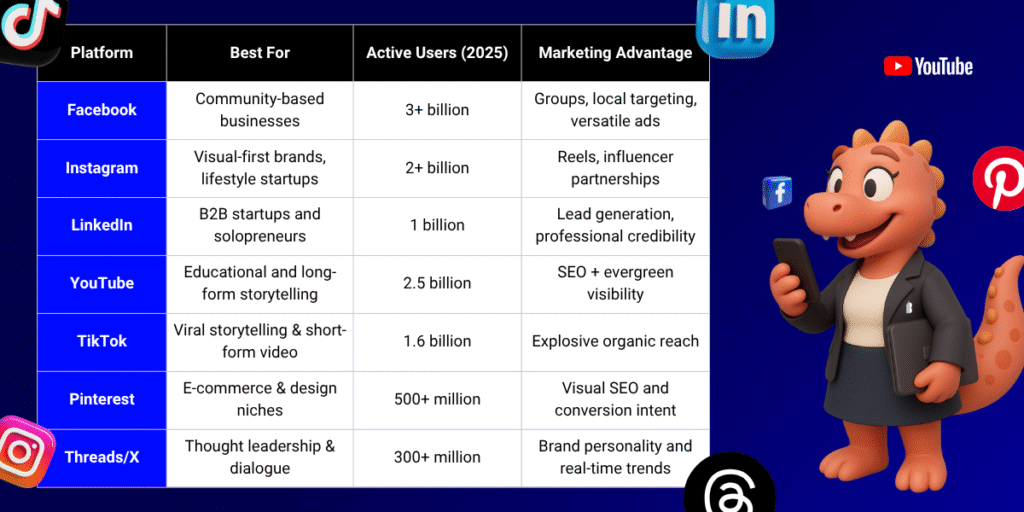
Comparing the Major Social Media Platforms for Marketing Success
| Platform | Best For | Active Users (2025) | Marketing Advantage |
| Community-based businesses | 3+ billion | Groups, local targeting, versatile ads | |
| Visual-first brands, lifestyle startups | 2+ billion | Reels, influencer partnerships | |
| B2B startups and solopreneurs | 1 billion | Lead generation, professional credibility | |
| YouTube | Educational and long-form storytelling | 2.5 billion | SEO + evergreen visibility |
| TikTok | Viral storytelling & short-form video | 1.6 billion | Explosive organic reach |
| E-commerce & design niches | 500+ million | Visual SEO and conversion intent | |
| Threads/X | Thought leadership & dialogue | 300+ million | Brand personality and real-time trends |
Who Competes in the Social Media Space?
When evaluating who the biggest competitors to social media apps are, look at emerging networking media apps like Discord, Geneva, or Substack Communities, which combine niche networking with social interaction.
What Is the Fastest-Growing Social Media Platform?
TikTok remains dominant in terms of growth rate, but Threads and Lemon8 are quickly emerging as alternatives for 2026.
How to Integrate Social Media Apps into Your Marketing Plan
Step 1: Define Goals
What’s your focus: brand awareness, lead generation, or direct sales? Each goal needs a different social media platform strategy.
Step 2: Choose the Right Platforms
From your platforms list, identify where your audience is most active.
Example:
- Visual Products? Instagram or Pinterest.
- B2B Services? LinkedIn.
- Entertainment or Education? TikTok or YouTube.
Step 3: Build Optimized Social Media Pages
Your social media pages are mini websites. Optimize with:
- Brand visuals & clear CTAs
- Consistent posting schedule
- Integration of links, shop tags, and reels
Step 4: Create a Data-Driven Content Strategy
Leverage insights from your analytics dashboard to understand:
- Which social media platform has the most users for your niche
- How many Facebook users use other social media platforms
Step 5: Measure and Improve
Monitor engagement, traffic, and conversions on a weekly basis. Use A/B testing to refine content formats and posting times.
Case Studies: How Startups Win With Social Media Apps
Example 1: How a Solopreneur Bakery Used Instagram Reels to Build a 30K Community & Double Local Sales
A home-based bakery in Lahore struggled with visibility and relied solely on word-of-mouth. To grow fast without ads, the owner committed to posting 3–4 Instagram Reels per week showcasing behind-the-scenes baking, customer reactions, and trending recipe POV videos.
The strategy focused on:
- Short, visual storytelling (before/after decorating shots)
- Trending audio + niche hashtags to boost discovery
- Local targeting through geotags and collaborations with micro-food bloggers
Within 6 months, the bakery grew to 30,000 followers, with Reels averaging 20k–80k views. The increased visibility doubled their monthly orders, primarily from nearby neighborhoods discovering their brand through Reels.
Example 2: How a SaaS Startup Used LinkedIn Thought Leadership to Generate 100 B2B Leads in 60 Days
A SaaS startup offering workflow automation solutions needed high-quality B2B leads. Instead of running ads immediately, they built a LinkedIn thought-leadership strategy around the founder.
The strategy included:
- Posting 3x weekly insights on automation, productivity, and industry pain points
- Commenting daily on posts from industry leaders to expand reach
- Publishing 2 long-form articles that broke down real case studies and measurable results
- Using LinkedIn DMs to nurture warm engagers into demo calls
The consistent authority-driven content positioned the founder as a credible voice, resulting in:
- 100 qualified B2B leads in just 60 days
- A 40% increase in demo bookings
Partnerships with two medium-sized companies that saw their posts
Example 3: How a Handmade Crafts SMB Leveraged Pinterest to Drive 3× Website Traffic
A small handmade crafts business selling home décor items struggled to generate website traffic and repeat buyers. To fix this, they focused on Pinterest, where visual search drives long-term discoverability.
The strategy involved:
- Designing SEO-optimized pins for each product category
- Creating step-by-step idea pins showing decorating tutorials
- Posting 10–15 pins per week in relevant niche boards
- Using seasonal trends (Ramadan décor, Eid gifting, winter home styling) to capture search spikes
Because Pinterest content has a long shelf life, its pins continued to rank and bring traffic for months. Within 90 days, they achieved:
- 3× more website visitors
- A 55% increase in add-to-carts
- Consistent U.S., UK, and GCC traffic without paid ads
These examples prove that choosing the best social media sites from your niche-focused social media list can multiply business results with limited budgets.
Emerging Trends Shaping the Future of Social Media Apps
AI-Driven Content Creation
AI tools are embedded in most top social media platforms, enabling faster content generation and personalization.
Community-First Platforms
Niche communities on new social media apps (e.g., Geneva, Substack) are shifting focus from broad reach to deep connection.
Fun Fact:
The social media app with the longest name is “The Professional Networking App for Content Creators and Collaborators”, a quirky indie platform launched in 2024.
Common Mistakes Small Businesses Make With Social Media Apps
- Joining every platform from the list of all social media sites without a strategy.
- Ignoring analytics and posting blindly.
- Treating social media platforms as broadcast tools, not communities.
- Copying large-brand tactics that don’t fit small business budgets.
Action Plan: Building Your Own Social Media Ecosystem
- Audit your current social media apps to identify what drives engagement.
- Focus on three platforms at most for consistent storytelling.
- Automate posts and track engagement through dashboards.
- Engage daily, comments, shares, DMs build visibility.
- Recycle winning content across other social media platforms to expand reach.
Conclusion: Turning Social Media Apps into Growth Engines
Modern marketing isn’t about being everywhere; it’s about being strategic.
When startups and small businesses utilize social media apps as brand-building tools (rather than time-wasting platforms), every post becomes a touchpoint for growth.
Whether it’s Facebook for trust, Instagram for visuals, or TikTok for storytelling, the right social media platforms can help you move from posting to profiting.
FAQs
Social media apps include platforms like Facebook, Instagram, TikTok, LinkedIn, X (formerly Twitter), and YouTube, all designed for interaction, sharing, and content creation. These social media platforms enable users to connect, communicate, and build online communities.
There are over 100 active social media platforms worldwide, though only about a dozen dominate global usage. The top social media platforms include Facebook, Instagram, TikTok, LinkedIn, and Snapchat , each serving different audiences and purposes.
Facebook remains the most-used social media platform globally, with nearly 3 billion active users. However, other platforms like YouTube, WhatsApp, and Instagram follow closely, each dominating different content and demographic segments
TikTok continues to lead as the fastest-growing social media app, especially among younger audiences. Its short-form video format and viral algorithm have transformed how businesses reach and engage potential customers.
The best social media platform depends on your business goals and audience. For example, Instagram is ideal for visual storytelling, LinkedIn for B2B connections, and Facebook for community engagement and local marketing.